
This project was completed under the Traffic Safety Culture Transportation Pooled Fund (TPF) project TPF-5(444). For more information on this TPF please visit the Traffic Safety Culture webpage.
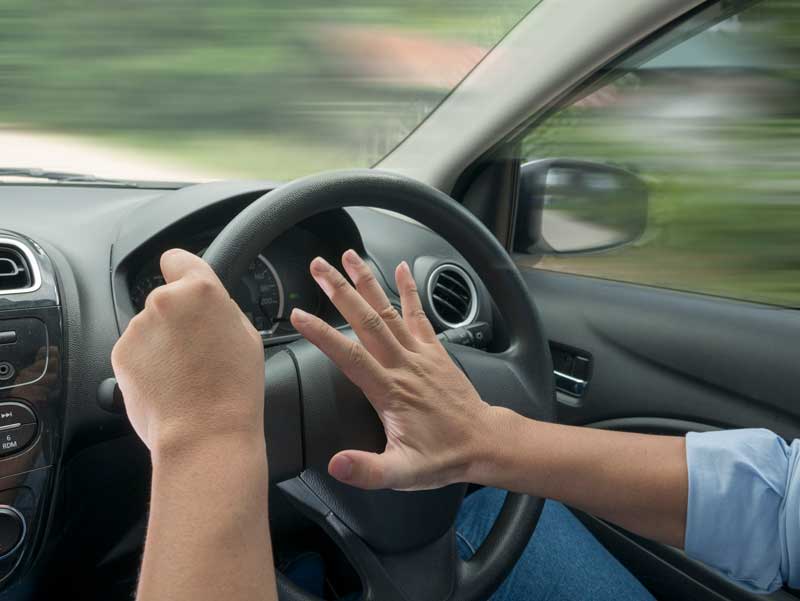
Aggressive driving is a topic of interest to most states because it increases crash risk and there is evidence suggesting aggressive driving has been increasing, especially during the COVID-19 pandemic (Office of Behavioral Safety Research, 2021). Aggressive driving is an umbrella term often used to describe a variety of risky driving behaviors (i.e., speeding, tailgating, failing to yield, preventing others from passing, running stop signs and red lights, etc.). Aggressive driving is also commonly used to describe a driver’s affective motivation (i.e., annoyance, hostility, anger, impatience, etc.) to engage in risky driving behaviors. Without consensus on what defines aggressive driving, it has been difficult to understand what factors precipitate such behaviors and what strategies effectively prevent and reduce the incidence of aggressive driving behavior.
How aggressive driving is defined, what factors precipitate such behavior, and what strategies effectively prevent and reduce the incidence of aggressive driving behavior are not widely understood. The proposed research seeks to address these gaps by proposing a two-phase project. In Phase 1, a literature review will be conducted to define aggressive driving and formulate a contextual model to explain its occurrence. A road users survey will also be developed and implemented to identify and differentiate clusters of driving behaviors that are perceived as “aggressive.” The research completed in Phase 1 will be used to develop resources to help traffic safety stakeholders guide decision making and conversations about aggressive driving. The work completed in Phase 1 will also be used in Phase 2 to develop strategies to prevent and reduce the incidence of aggressive driving behavior.
Phase 1
Final Report
Traffic Safety Practitioners Resource (archived*)
Presentation
Phase 2
Building on Phase 1 work that defined aggressive driving and identified promising intervention points, this Phase 2 study examined two complementary strategies to reduce aggressive driving: supporting bystanders (i.e., spouses/partners, family members, and close friends) to intervene with drivers who engage in aggressive driving, and developing and testing media messages to encourage safer driving among drivers themselves. Key informant interviews were conducted with bystanders. Findings informed the development of a three-step bystander intervention that included expressing concern and connecting to shared values. The intervention was tested with a national sample of 102 bystanders. Results demonstrated increased bystander confidence, greater use of constructive strategies, and perceived reductions in aggressive driving frequency. Participants reported that the strategies were feasible, acceptable, and helpful.
Media messages were developed in three main themes: cognitive reappraisal, adaptive response, and prosocial driving. Messages were tested with 864 drivers who reported recent engagement in aggressive driving. Findings indicated that, across message themes, messages were well received, prompted reflection on driving behavior, and supported changes in perceptions related to safety and responsibility.
Together, these findings suggest that engaging bystanders and deploying supportive, nonjudgmental messaging are promising, complementary approaches to reducing aggressive driving and strengthening traffic safety culture. Resources were developed: a bystander conversation guide, a community dissemination toolkit, and a messaging development resource.
Resources
Engaging Bystanders to Reduce Aggressive Driving
Bystander Engagement Project Summary
Conversation Guide
Bystander Toolkit
Developing Effective Messages to Reduce Aggressive Driving
Messages Project Summary
Aggressive Message Guidance